
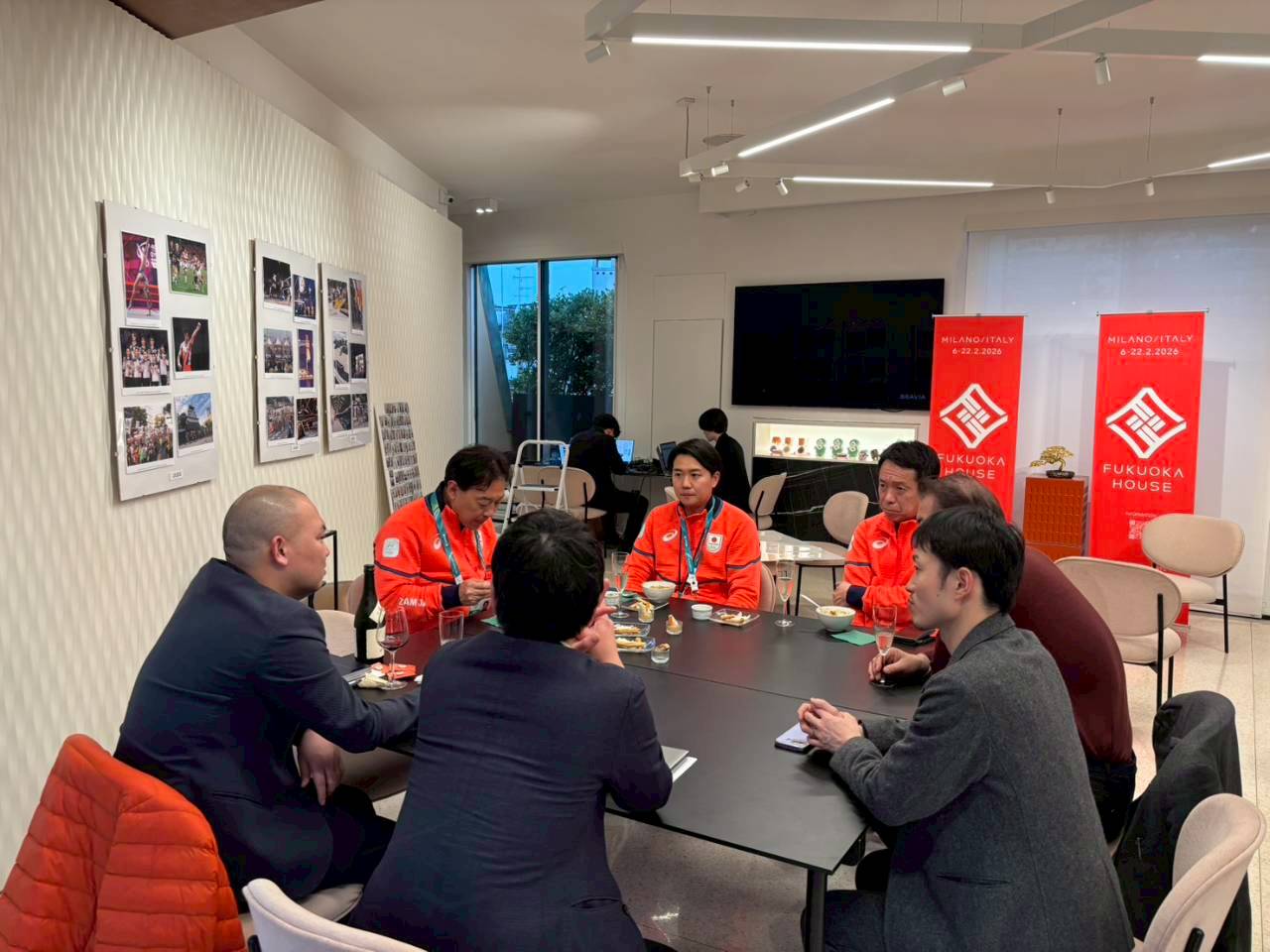
【ミーティングセッション⑪:JOCとの戦略対話 次世代人材育成とアスリート支援の多角化】
出席者:岩淵健輔 氏(公益財団法人 日本オリンピック委員会 理事)
渡辺稔一 氏(公益財団法人 日本オリンピック委員会 国際部担当部長)
土本楓 氏(公益財団法人 日本オリンピック委員会 国際部)
谷岡弘邦 氏(株式会社CB代表取締役))
船木 氏(福岡ハウス館長)
中谷元亜 氏(株式会社 SPORTS Edge スポーツ業務3部長)
【Meeting Session⑪:Strategic Dialogue with the JOC – Human Resource Development and Multifaceted Athlete Support】
Participants:
•Mr. Kensuke Iwabuchi, Executive Board Member, Japanese Olympic Committee (JOC)
•Mr. Toshikazu Watanabe, Director, International Relations Department, Japanese Olympic Committee (JOC)
•Ms. Kaede Tsumoto, International Relations Department, Japanese Olympic Committee (JOC)
•Mr. Hirokuni Tanioka, CEO, CB, Ltd.
•Mr.Masanari Funaki, Director of Fukuoka House
•Mr. Mototsugu Nakatani, General Manager, Sports Business Department 3, SPORTS Edge Co., Ltd.
1. 福岡ハウスの目的(谷岡氏より説明)
•目的の再定義: 「シティプロモーション」を目的としたハウス設置ではなく、真の狙いは将来の日本のスポーツ界を担う人材の育成及び、IF等の国際組織とのネットワーク構築。
•具体的アプローチ: 各IF(国際競技連盟)や競技関係者を招待し、連盟の会長、事務総長、NBCブロードマネージャーといった組織のトップから現場の責任者まで幅広い層によるセッションを実施する。
•ターゲットと波及効果: スポーツに関わる人勢をメインの対象とし、知見を共有することで、将来的に日本スポーツ界全体のボトムアップと発展を目指している。
1. Objectives of Fukuoka House (Explanation by Mr. Tanioka)
•Redefining the Purpose: The establishment of the House is not merely for “City Promotion.” The true aim is to develop the human resources who will lead the future of the Japanese sports community and to build networks with the international community such as International Federations (IFs).
•Specific Approach: By inviting various stakeholders involved in Sports, the House hosts sessions featuring a wide range of professionals, from top organizational leaders like Presidents and General Secretaries to on-site experts such as NBC Broadcast Managers.
•Target and Ripple Effects: The primary target is the talent involved in the sports industry. By sharing expertise and global insights, the project aims to achieve a bottom-up elevation and long-term development of the Japanese sports world.
2. アスリートへの食環境支援(JOCからの説明)
•選手村の課題と対策: 選手村の食事はメニューが固定化されやすく、選手が飽きてしまう「食のストレス」が課題となっている。
•官民連携によるサポート: 味の素の支援やJSC(日本スポーツ振興センター)による多様な食事提供が、選手のコンディション維持に不可欠な役割を果たしている。
2. Dietary Support for Athletes (Explanation by the JOC)
•Challenges and Countermeasures in the Olympic Village: A key challenge is “dietary stress,” where fixed menus in the athlete’s village can lead to fatigue and discomfort created with non habituary foods.
•Public-Private Partnership: Support from Ajinomoto and the provision of diverse dietary options by the Japan Sport Council (JSC) play an indispensable role in maintaining the athletes’ peak condition.
3. 国内スポーツ環境の現状と懸念(船木より説明)
•競技人口と活動形態の変化: バレーボールなどの室内競技であっても、少子化や活動時間の減少により競技人口が低下傾向にある。
•地域活動の移行期: 学校単位の部活動から外部クラブチーム化への移行が進んでおり、これまでの育成サイクルが崩れることへの懸念が現場から示されている。
3. Current Status and Concerns of the Domestic Sports Environment (Explanation by Mr. Funaki)
•Changes in Participation and Activity Patterns: Even for indoor sports such as volleyball, the number of participants is on a downward trend due to the declining birthrate and reduced time allocated for activities.
•Transition in Community Activities: The transition from school-based extracurricular clubs (Bukatsu) to external club teams is underway. Concerns have been raised from the field regarding the potential disruption of established development and scouting cycles.
4. JOCの想い
•JOC: 我々アスリートを支える側も頑張らないといけない。
4. The JOC’s Resolve
•The JOC’s Stance: “We, as the supporters of athletes, must also push ourselves and work harder than ever to meet these challenges.”